Sludge Dewatering Chemicals: Types, Benefits, and Industrial Applications
SWT
Senkar Water Tech Experts
Water Treatment Expert
Mar 20, 2026 • 4 min read
Learn how sludge dewatering chemicals enhance wastewater treatment, reduce sludge volume, and improve efficiency across industrial applications.
Effective sludge management is a critical aspect of industrial wastewater treatment. As industries generate large volumes of sludge, handling and disposing of it efficiently becomes a major challenge. This is where Sludge Dewatering Chemicals play a vital role in improving treatment efficiency, reducing waste volume, and lowering operational costs.
In modern industrial processes, the use of Sludge Dewatering Chemicals has become essential to ensure compliance with environmental regulations while optimizing performance. In this blog, we explore the types, benefits, and applications of Sludge Dewatering Chemicals, and how Senkar Water Tech delivers reliable solutions for industrial wastewater management.
What Are Sludge Dewatering Chemicals?
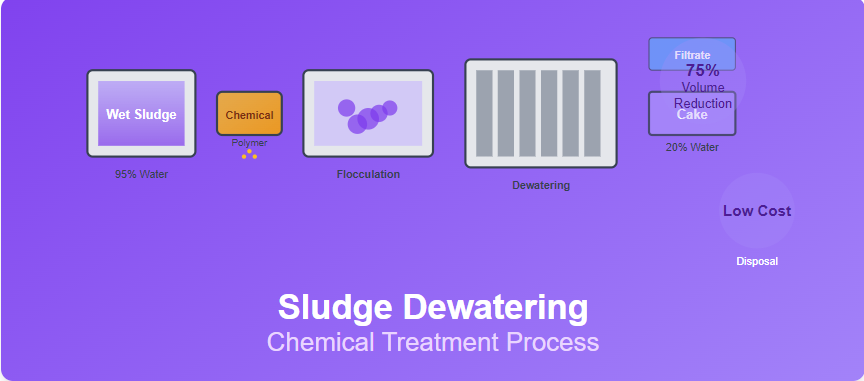
Sludge Dewatering Chemicals are specialized agents used to separate water from sludge, making it easier to handle, transport, and dispose of. These chemicals enhance the aggregation of fine particles into larger flocs, enabling efficient solid-liquid separation.
The process of sludge dewatering typically involves mechanical equipment such as centrifuges, belt presses, or filter presses. However, without the support of Sludge Dewatering Chemicals, achieving optimal performance can be difficult.
Efficiency Booster
By improving floc formation and reducing moisture content, Sludge Dewatering Chemicals significantly enhance the efficiency of mechanical dewatering systems, achieving up to 75% volume reduction.
Types of Sludge Dewatering Chemicals
Different industries require different types of Sludge Dewatering Chemicals based on the nature of sludge and treatment requirements.
1. Cationic Polymers
Cationic polymers are the most commonly used Sludge Dewatering Chemicals in industrial wastewater treatment.
Ideal for organic sludge
Improve floc formation
Enhance dewatering efficiency
Particularly effective in municipal and food processing industries.
2. Anionic Polymers
Anionic polymers are suitable for sludge with high inorganic content.
Effective for mineral-based sludge
Improve settling characteristics
Support solid-liquid separation
Widely used in mining and chemical industries.
3. Non-Ionic Polymers
Used in specific applications where neither cationic nor anionic chemicals are effective.
Suitable for neutral sludge conditions
Provide balanced performance
Improve filtration processes
Versatile chemicals used across various complex industrial streams.
4. Coagulants
Coagulants such as alum or ferric chloride are often used alongside polymers.
Neutralize particle charges
Enhance micro-floc formation
Improve overall dewatering speed
Complement polymers to achieve superior solid recovery rates.
Benefits of Sludge Dewatering Chemicals
The use of Sludge Dewatering Chemicals offers multiple advantages for industrial wastewater treatment systems:
1. Reduced Sludge Volume
By removing excess water, Sludge Dewatering Chemicals significantly reduce sludge volume, making disposal easier and more cost-effective.
2. Lower Disposal Costs
Less volume means reduced transportation and disposal expenses. Industries can achieve substantial annual savings by using Sludge Dewatering Chemicals effectively.
3. Improved Dewatering Efficiency
These chemicals enhance the performance of mechanical dewatering equipment, ensuring faster processing cycles and higher cake dryness.
4. Better Compliance with Regulations
Environmental regulations require proper sludge handling and moisture limits. Dewatering chemicals help industries consistently meet environmental compliance standards.
5. Enhanced Operational Performance
Optimized sludge management leads to smoother plant operations, reduced equipment wear, and minimized downtime.
Industrial Applications of Sludge Dewatering Chemicals
Sludge Dewatering Chemicals are widely used across various industries where wastewater treatment is essential:
Food and Beverage Industry: Used to treat organic sludge generated from processing activities.
Textile Industry: Help manage dye-containing sludge and improve dewatering efficiency.
Chemical and Pharmaceutical Industry: Assist in handling complex sludge compositions and ensure effective separation.
Mining and Metal Processing: Used for mineral sludge dewatering and improving solid recovery rates.
Municipal Wastewater Treatment: Play a key role in managing sewage sludge and reducing municipal disposal challenges.
Key Factors to Consider When Choosing Sludge Dewatering Chemicals
Selecting the right Sludge Dewatering Chemicals is crucial for achieving optimal results. Here are the primary factors to evaluate for your facility:
Type of Sludge
Evaluating whether the sludge is organic, inorganic, or a mixed biological slurry.
pH & Composition
Testing pH levels, charge density, and specific chemical constituents.
Dewatering Equipment
Matching polymer shear sensitivity with centrifuges, belt presses, or filter presses.
Desired Cake Dryness
Targeting specific dryness levels to optimize transportation and disposal weight.
Cost & Dosing Efficiency
Balancing chemical unit cost with required dosage rate for maximum long-term ROI.
How Senkar Water Tech Supports Efficient Sludge Dewatering
Senkar Water Tech offers advanced solutions for industrial wastewater treatment, including high-performance Sludge Dewatering Chemicals tailored to specific industry needs.
Why Choose Senkar Water Tech?
✓Customized Chemical Solutions: Formulated for different sludge types and industrial processes.
✓Expert Guidance: On-site analysis for precise chemical selection and dosage optimization.
✓High-Quality Products: Ensures consistent performance and maximum volume reduction.
✓System Optimization: Full technical support for reducing operational and disposal costs.
Future Trends in Sludge Dewatering
The future of wastewater treatment is driven by sustainability and efficiency. Key innovations include:
Eco-friendly and biodegradable chemicals
Advanced polymer formulations
Automation and smart dosing systems
Integration with digital monitoring tools
These advancements will further enhance the performance and efficiency of Sludge Dewatering Chemicals in industrial applications.
Optimizing Wastewater with Sludge Dewatering Chemicals
Efficient sludge management is essential for industries aiming to reduce costs and improve environmental performance. By using the right Sludge Dewatering Chemicals, industries can achieve better dewatering efficiency, lower waste volumes, and ensure regulatory compliance.
Partnering with experts like Senkar Water Tech ensures access to advanced solutions and industry expertise. With the right approach, Sludge Dewatering Chemicals can transform wastewater treatment processes into efficient, cost-effective, and sustainable operations.
📞 Get in Touch with Senkar Water Tech
Looking for reliable solutions in wastewater treatment? Contact Senkar Water Tech today to explore high-performance sludge dewatering solutions tailored to your industry needs.