How Does MBR Technology in STP Improve Sewage Treatment Efficiency?
Wastewater treatment has become an essential part of sustainable urban development. With rapid population growth, industrial expansion, and increasing environmental regulations, conventional sewage treatment methods often struggle to meet modern efficiency and quality standards. This is where MBR technology in STP has emerged as a powerful and reliable solution.
Membrane bioreactor systems combine biological treatment with advanced membrane filtration to produce highly treated water suitable for reuse. Because of its compact design, superior filtration capability, and consistent performance, MBR technology in STP is becoming increasingly popular across residential, commercial, and industrial wastewater treatment facilities.
In this article, we explore how MBR technology in STP improves sewage treatment efficiency and why it is considered one of the most advanced wastewater treatment solutions today.
Understanding MBR Technology in STP
Before exploring its efficiency benefits, it is important to understand what MBR technology in STP actually means.
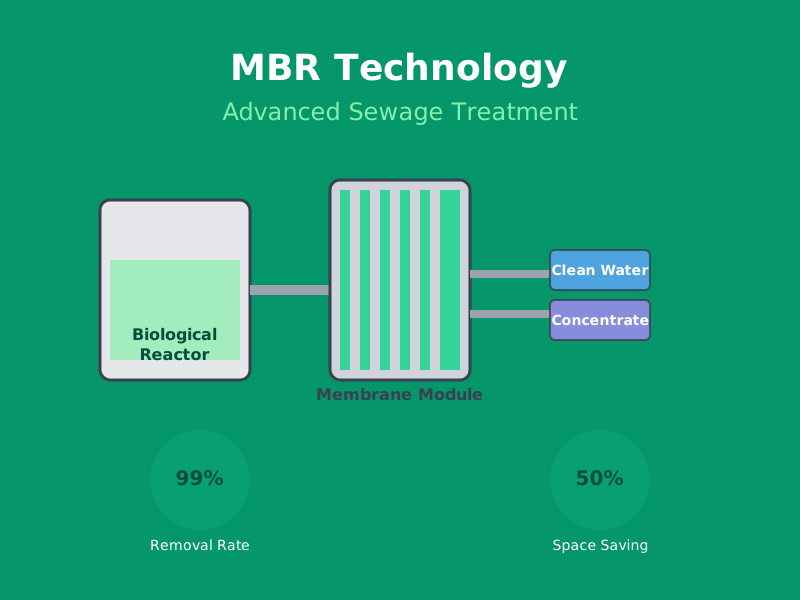
A Membrane Bioreactor (MBR) is an advanced wastewater treatment process that combines a biological treatment process with membrane filtration. The system uses microorganisms to break down organic pollutants, while membranes act as a physical barrier to separate treated water from solids and contaminants.
Unlike traditional treatment systems, MBR technology in STP replaces the conventional secondary clarifier with membrane filtration units. These membranes filter out suspended solids, bacteria, and other impurities, producing high-quality treated water.
Because of this integration of biological treatment and filtration, MBR technology in STP significantly improves treatment efficiency and water quality.
Key Components of MBR Technology in STP
A typical system using MBR technology in STP consists of several key components that work together to ensure efficient sewage treatment.
1. Biological Reactor
The biological reactor is where microorganisms break down organic pollutants present in wastewater. In MBR technology in STP, this process is similar to conventional activated sludge treatment but operates at higher biomass concentrations.
2. Membrane Filtration Unit
The membrane module is the core component of MBR technology in STP. It acts as a physical barrier that separates treated water from suspended solids, bacteria, and other contaminants.
3. Aeration System
Aeration supplies the oxygen required for biological processes and prevents membrane fouling. Efficient aeration plays a critical role in maintaining the performance of MBR technology in STP.
4. Sludge Handling System
Excess sludge generated during treatment is periodically removed. Even though sludge production is lower, MBR technology in STP still requires proper sludge management.
How MBR Technology in STP Improves Sewage Treatment Efficiency
One of the biggest advantages of MBR technology in STP is its ability to deliver superior treatment performance compared to traditional sewage treatment methods. Here are the main ways it improves efficiency.
1. Superior Filtration and Water Quality
One of the most important benefits of MBR technology in STP is its advanced membrane filtration capability. The membranes have very small pores that effectively remove suspended solids, bacteria, and pathogens.
This allows MBR technology in STP to produce treated water with significantly lower turbidity and higher clarity. In many cases, the treated water can be reused for irrigation, flushing, cooling systems, or industrial processes.
2. Higher Biomass Concentration
Conventional sewage treatment plants rely on settling tanks to separate sludge from treated water. However, these systems often face issues like sludge bulking or poor settling.
In contrast, MBR technology in STP allows higher biomass concentration in the biological reactor. This enhances microbial activity and improves the breakdown of organic pollutants, resulting in faster and more efficient treatment.
3. Compact Design and Space Efficiency
Urban areas often face space constraints when installing wastewater treatment facilities. One major advantage of MBR technology in STP is its compact design.
Because the membrane filtration unit replaces secondary clarifiers, the overall footprint of MBR technology in STP is significantly smaller. This makes it ideal for residential complexes, hotels, hospitals, and commercial buildings.
4. Consistent Treatment Performance
Fluctuations in wastewater flow or pollutant load can affect conventional treatment systems. However, MBR technology in STP provides stable and consistent performance even under varying operating conditions.
The membrane barrier ensures that treated water quality remains consistent regardless of changes in influent wastewater characteristics.
5. Reduced Sludge Production
Another advantage of MBR technology in STP is lower sludge production compared to traditional systems. Because the process maintains higher biomass concentration and longer sludge retention time, organic matter is broken down more efficiently.
This reduces sludge handling and disposal costs while improving overall operational efficiency.
6. Better Removal of Pathogens and Contaminants
The membranes used in MBR technology in STP act as a highly effective filtration barrier. They remove bacteria, viruses, and fine suspended solids that may pass through conventional treatment systems.
This makes MBR technology in STP particularly suitable for applications where treated water reuse is required.
7. Enhanced Water Reuse Potential
Water scarcity is becoming a major challenge worldwide. One of the biggest advantages of MBR technology in STP is its ability to produce high-quality treated water suitable for reuse.
By enabling water recycling, MBR technology in STP helps reduce freshwater consumption and supports sustainable water management practices.
Applications of MBR Technology in STP
Because of its efficiency and compact design, MBR technology in STP is widely used across different sectors.
🏢 Residential Complexes
Large apartment buildings use MBR technology in STP to treat wastewater and reuse it for landscaping, flushing, and cleaning purposes.
🏨 Commercial Buildings
Hotels, malls, and office complexes install systems based on MBR technology in STP to manage wastewater efficiently.
🏭 Industrial Facilities
Industries generate wastewater containing complex pollutants. MBR technology in STP helps industries meet strict environmental discharge standards.
🏥 Hospitals and Institutions
Hospitals often require advanced treatment solutions due to high pathogen loads. MBR technology in STP ensures safe and reliable wastewater treatment.
Why Choose Senkar Water Tech for MBR STP Solutions?
Implementing MBR technology in STP requires technical expertise, advanced equipment, and proper system design. Senkar Water Tech specializes in providing efficient sewage treatment solutions tailored to different industries.
With a focus on innovation, quality engineering, and environmental sustainability, Senkar Water Tech designs treatment plants using MBR technology in STP that deliver reliable performance and long-term operational benefits.
Their solutions help businesses and residential communities improve wastewater management while meeting regulatory compliance requirements.
Transforming Wastewater Treatment with MBR Systems
Modern wastewater treatment demands efficient, reliable, and sustainable solutions. MBR technology in STP has proven to be one of the most advanced methods for achieving superior sewage treatment performance.
By combining biological treatment with membrane filtration, MBR technology in STP improves water quality, reduces sludge production, ensures consistent performance, and supports water reuse. Its compact design and high efficiency make it an ideal choice for modern sewage treatment plants.
As environmental regulations become stricter and water conservation becomes more important, MBR technology in STP will continue to play a crucial role in improving wastewater treatment systems.
Frequently Asked Questions
1. What is MBR technology in STP?
MBR technology in STP refers to a sewage treatment process that combines biological treatment with membrane filtration to produce high-quality treated water.
2. Why is MBR technology in STP considered efficient?
It provides better filtration, higher biomass concentration, consistent treatment performance, and improved removal of contaminants compared to conventional sewage treatment systems.
3. Is MBR technology in STP suitable for water reuse?
Yes. The treated water produced using MBR technology in STP is often suitable for reuse in irrigation, flushing, industrial cooling, and landscaping.
4. Where is MBR technology in STP commonly used?
It is widely used in residential complexes, commercial buildings, hospitals, and industries where efficient wastewater treatment is required.
Ready to implement MBR technology in your STP? Contact Senkar Water Tech today for expert consultation and customized membrane bioreactor solutions that deliver superior treatment efficiency and water quality.