Your factory may know how much water it purchases each month. But does it know how much wastewater comes from each production line, how its composition changes, and where recovered water could be reused?
Readiness depends on more than available space or an investment budget. It means having enough reliable information to design a system that works under actual production conditions.
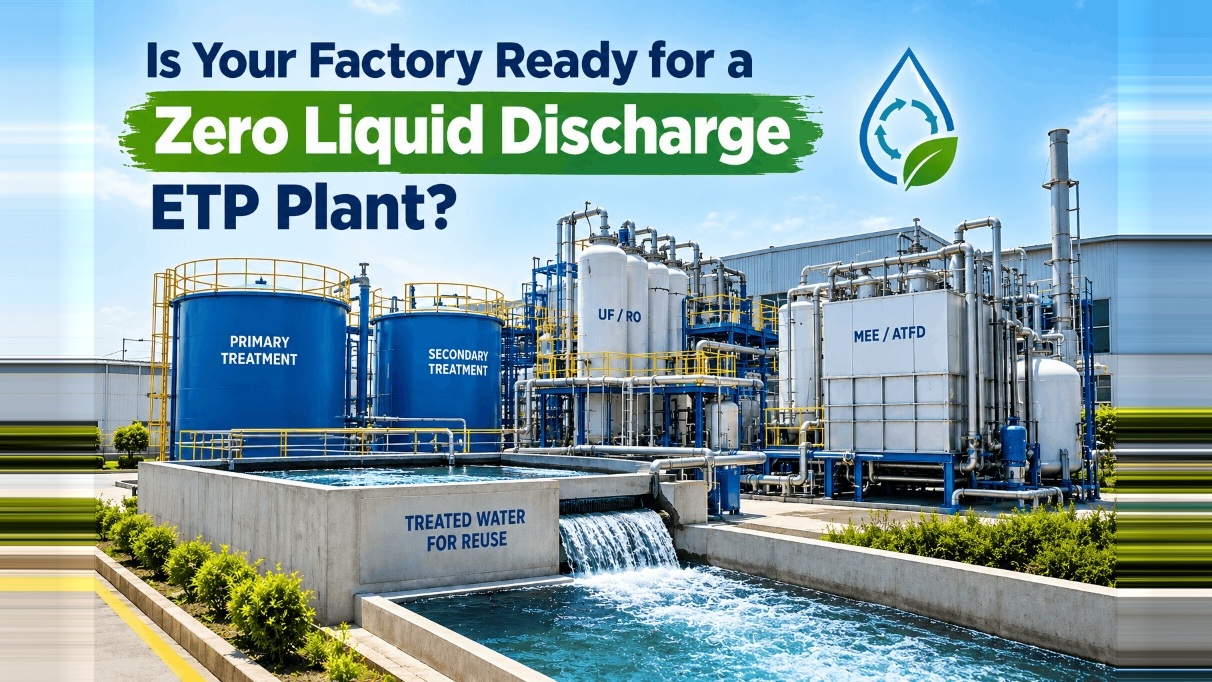
An Effluent Treatment Plant treats wastewater generated by industrial activities. A Zero Liquid Discharge, or ZLD, arrangement extends treatment to recover water and manage the remaining concentrate without liquid effluent leaving the defined system boundary.
Depending on the wastewater, the treatment process may include physical, chemical, or biological treatment, followed by membrane filtration, evaporation, and crystallisation. These technologies perform different tasks, so the appropriate combination depends on the effluent being treated.
ZLD still produces residues that require management. Sludge, salts, and other solids do not disappear when water is recovered.
For factory owners, the practical question is whether the site can consistently support the entire treatment and recovery process.
1. Do You Have a Reliable Water Balance?
A water balance records where water enters, how it is used, and where it goes.
Start by measuring freshwater intake, process consumption, cooling system makeup, cleaning water, wastewater generation, and existing reuse. Account for evaporation, moisture carried away in products, and other losses.
Monthly totals alone may hide important variations. A factory operating several batches a day can generate short periods of high wastewater flow that differ considerably from its daily average.
For example, cleaning several production lines simultaneously may create a treatment load that an average-flow calculation misses.
Readiness check: Can your team explain the major water flows and identify peak wastewater generation periods using measurements rather than estimates?
2. Has Your Wastewater Been Properly Characterised?
Two factories producing the same daily wastewater volume may need very different treatment systems.
One stream may contain mostly biodegradable organic matter. Another may contain high dissolved salts, oil, metals, or chemicals that interfere with treatment.
A wastewater assessment should examine relevant parameters such as:
- Daily flow and peak flow.
- pH and temperature.
- Total dissolved and suspended solids.
- Chemical and biological oxygen demand.
- Hardness, silica, oil, and grease.
- Metals or process-specific contaminants.
Sampling should represent normal production, cleaning operations, and significant batch changes. A single convenient sample may not capture the most challenging conditions.
Readiness check: Do you have representative laboratory results and production records that explain how effluent quality varies?
3. Can You Reduce or Separate Wastewater First?
Before deciding how to treat all wastewater together, examine whether some streams should remain separate.
Mixing a relatively clean stream with a concentrated or difficult effluent can increase the volume requiring intensive treatment. Separating streams may create opportunities for direct reuse, targeted treatment, or more manageable concentrate handling.
Review practices such as unnecessary rinsing, leaking valves, uncontrolled washing, and the mixing of stormwater with industrial effluent.
Any proposed process change should be checked against production quality and safety requirements. Water reduction should support reliable manufacturing.
Readiness check: Have you investigated avoidable water use and assessed which streams can be segregated?
4. Is Your Existing ETP Working Consistently?
A ZLD upgrade needs a dependable treatment foundation. Selecting suitable ETP technology for chemical industry applications starts with understanding the wastewater characteristics and the performance of the existing plant.
If the existing ETP experiences unstable pH, frequent solids carryover, inconsistent organic removal, or equipment breakdowns, investigate those problems before adding recovery equipment.
Poor feedwater quality can compromise downstream performance. Pretreatment and recovery stages must therefore be designed as a connected system.
Review operating logs, dosing practices, maintenance history, and the condition of tanks, pumps, and instruments. An independent performance assessment can help distinguish equipment limitations from operational problems.
Readiness check: Can the existing ETP consistently deliver the feedwater quality required by the proposed recovery system?
5. Have You Identified Where Recovered Water Will Go?
Water recovery creates value when the factory has a practical use for the output.
Possible destinations include cooling systems, selected washing operations, and suitable production processes. Each application has its own quality requirements.
Boiler feedwater, for instance, may need additional treatment beyond what is acceptable for general washing. Product-contact applications require particular attention to process and quality standards.
Match expected recovered-water production with actual demand. Include storage, distribution piping, monitoring, and arrangements for water that temporarily fails the reuse specification.
Readiness check: Is there a documented reuse plan showing the required quality, quantity, and destination of recovered water?
6. Can the Site Support Utilities and Maintenance?
A treatment proposal should fit the factory’s infrastructure.
Check electrical capacity, thermal energy requirements where applicable, equipment access, chemical storage, ventilation, and maintenance space. Concentrate treatment deserves particular attention because evaporation separates water while leaving pollutants concentrated in the residual brine.
Also establish what happens during planned servicing or an unexpected shutdown. Any temporary storage or production-response arrangement must remain within the site’s permitted operating conditions.
Readiness check: Have utility availability, maintenance access, and downtime arrangements been included in the project assessment?
7. Do You Have a Residue Management Plan?
A factory should understand the expected quantity and characteristics of sludge and salts before commissioning.
Determine how residues will be tested, stored, transported, and managed through appropriate facilities. Include these costs in the operating budget.
Do not assume recovered salts will automatically generate income. Their reuse potential depends on composition, purity, consistency, and a suitable receiving process or buyer.
Readiness check: Is there a practical, documented route for every residual waste stream?
8. Is the Financial Assessment Based on Real Operating Conditions?
Compare the full cost of the proposed system with the factory’s current water and wastewater costs.
Include capital investment, energy, chemicals, staffing, maintenance, consumables, residue management, and likely equipment replacement. Evaluate freshwater savings using a recovery estimate supported by the actual effluent characteristics.
Ask suppliers to define the feedwater range, output quality, utility consumption, and operating conditions behind their performance commitments.
Readiness check: Does the business case remain workable when production volumes, wastewater strength, and utility costs vary?
If several answers are unclear, the next step is a structured feasibility assessment.
Bring together production, maintenance, quality, environmental, and finance teams to establish the missing information. Where heavy metals are present, assess how the system will remove heavy metals from industrial effluent and manage the resulting residues.
A well-prepared factory can give suppliers a meaningful design brief and compare proposals on consistent terms. That preparation helps turn a Zero Liquid Discharge ETP plant into a reliable part of daily operations, with clear expectations for water recovery, operating costs, and residue management.